
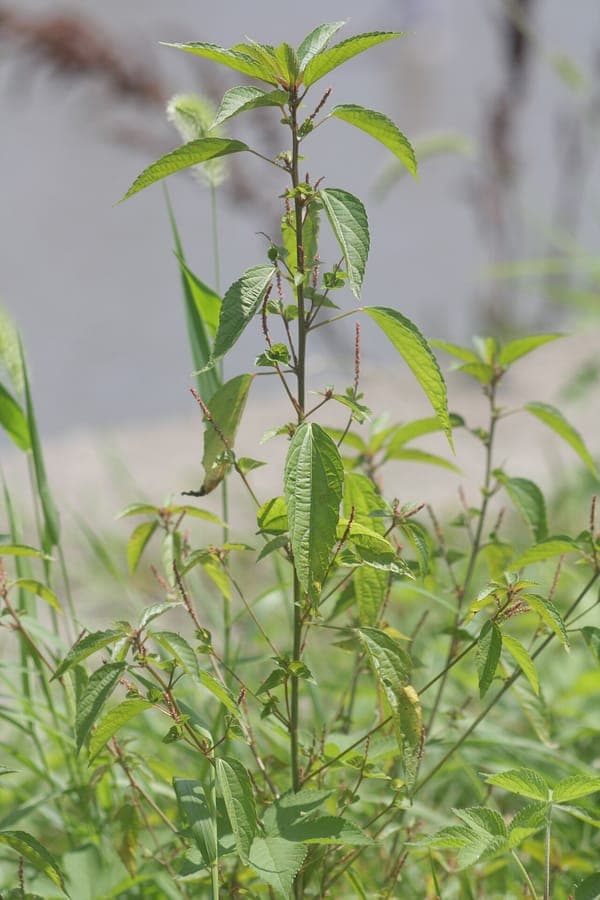
Dalgial / CC BY 3.0, via Wikimedia Commons
Asian copperleaf: complete guide
Acalypha australis
¿Quieres ver Asian copperleaf: complete guide en tu jardín?
1 minuto, sin tarjeta de crédito
Asian copperleaf, scientifically known as Acalypha australis, is a fast-growing herbaceous plant from South China, Japan and Southeast Asia. This attractive annual plant is particularly popular for its copper-colored foliage, which not only looks beautiful but also has an interesting texture. In gardens this plant is often used as a decorative element, especially in beds, borders and as a potted plant on patios.
Acalypha australis grows as a compact, bushy herb that usually reaches 30 to 60 centimeters in height. The leaves are green to reddish-brown in color, depending on light intensity and growing conditions. The more direct sunlight the plant receives, the more intense the reddish-brown coloring becomes. The leaves are elliptical in shape, approximately 5 to 10 centimeters long, with a rough, hairy surface. In summer the plant produces small, inconspicuous red flowers in abundant flower clusters, providing an interesting contrast between the copper-colored foliage and the red flowers.
Although this plant originates from tropical and subtropical regions, it grows quite rapidly and also accepts temperate climates. In temperate zones it is usually treated as an annual crop, planted in spring and removed in autumn. In warm regions, however, it can remain perennial.
When growing Acalypha australis, it is crucial to choose a location with full sun. The plant needs at least 6 hours of direct sunlight per day to maintain its beautiful reddish-brown color. In shade the plant will turn green and lose much of its characteristic coloring. For soil, choose a nutrient-rich, well-draining one with a pH between 5.5 and 7.0. When planting, add compost or leaf mold to the soil to increase nutrient content.
Watering should be done regularly, especially during warm, dry periods. The plant does not like dried-out soil, but stagnant water should also be avoided. Check the soil regularly and water when the top 2 to 3 centimeters feel dry. In pot culture, drainage is essential - ensure pots have drainage holes and use potting soil specially designed for flowering plants.
Feeding is important for optimal growth and flowering. Give the plant a balanced fertilizer every two weeks during the growing season (May to October). This will ensure strong growth, full foliage coverage and excellent flower production.
Diseases and pests are relatively rare, but spider mites and whiteflies can occur, especially in warm, dry weather. Check the undersides of leaves regularly. If you notice problems, spray the plant with soapy water or apply an insecticide according to label instructions.
Propagation of Acalypha australis can be done by seed (the easiest for home gardeners) or by cuttings. Seed can be sown in early spring (March-April) in nutrient-rich seed compost. Keep the soil moist and place the seed tray in a warm location (at least 20 degrees Celsius) until the seed germinates. Young plants can be pricked out into larger pots after 4 to 6 weeks.
Asian copperleaf is available at many garden centers and nurseries. In England, specialized garden retailers are good sources for this plant, especially in late spring. It is best to choose young, healthy plants.
This plant offers a spectacular effect in borders, beds and pot culture, especially when grown in groups or combinations with other flowering plants with contrasting colors. The reddish-brown foliage forms a beautiful contrast with the silvery foliage of, for example, silver sage or the bright yellow foliage of yellow coleus.
For an easy, decorative garden plant that requires little maintenance and has a long flowering period, Asian copperleaf is an excellent choice. With its rapid growth and spectacular color, this plant brings life and movement to any garden plan.
¿Quieres ver Asian copperleaf: complete guide en tu jardín? Crea un diseño gratis ahora.
Sube una foto, elige un estilo y obtén un diseño fotorrealista con lista de plantas en menos de un minuto.
Más de 10.000 jardines diseñados
Sin tarjeta de crédito


Plantas similares
Woolly mercury: complete guide
Mercurialis tomentosa
All about Mercurialis tomentosa, the woolly mercury from southwestern Europe: site, soil, watering, care and garden design tips.
Shurur: complete guide
Euphorbia fruticosa
Everything about Shurur: cultivation in dry climates, xeriscaping, care and tips for drought-resistant gardens in warm climates
Glary spurge: complete guide
Euphorbia glareosa
Everything about glary spurge: cultivation, maintenance, frost hardiness and use in Mediterranean and mountain-inspired gardens