
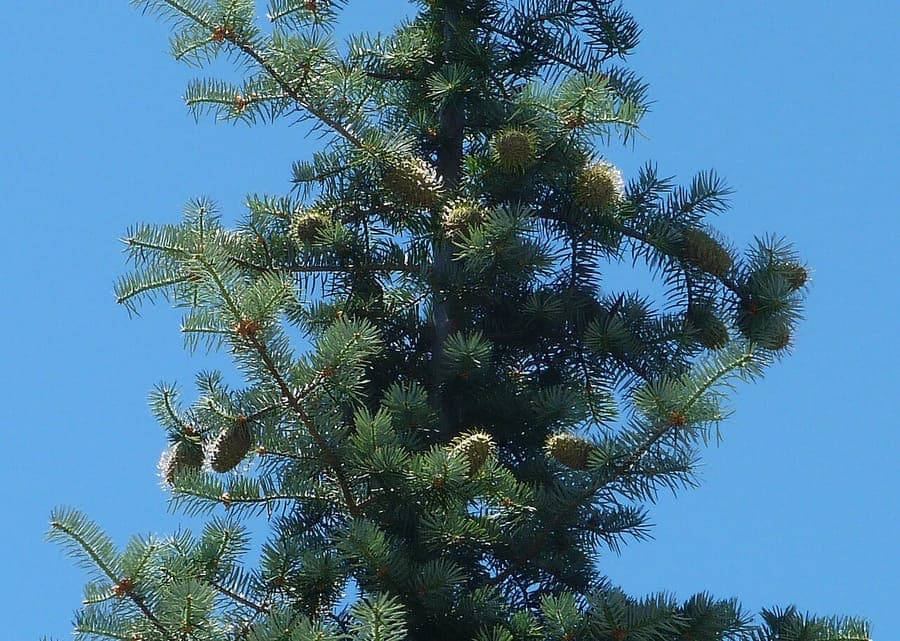
Silversyrpher (very busy at the moment) from Scotland, UK / CC BY 2.0, via Wikimedia Commons
Abies bracteata: complete guide
Abies bracteata
¿Quieres ver Abies bracteata: complete guide en tu jardín?
1 minuto, sin tarjeta de crédito
Overview
Abies bracteata, known as Santa Lucia fir or Bristlecone fir, is an exceptionally rare and beautiful fir originating from the Santa Lucia mountains of California. This isn't merely a front yard tree: it's a specimen plant for those seeking something truly special.
The tree forms a tight pyramidal shape and reaches 15-25 meters at maturity. In front yards, you maintain it via pruning at 5-8 meters maximum. The elegant, pointed form creates a highly distinctive focal point.
Appearance and Characteristics
Santa Lucia fir has exceptionally fine needles angled slightly downward, giving the tree an graceful, almost delicate appearance. Needles are bright green. The buds are characteristically large and glossy brown. Hence the name 'bracteata' - the bracts (protective scales) are notably prominent.
Growth form is strictly upright and pyramidal. Fast-growing in youth (to 40 centimeters annually), then moderating. The tree naturally forms an orderly shape requiring minimal pruning.
Ideal Location
Abies bracteata demands full sun: minimum four to six hours of direct sunlight daily. Partial shade produces thinning branching.
Wind is mildly concerning: Santa Lucia fir originates in mountainous regions with occasional strong winds, so it tolerates wind reasonably. Protection is preferable, however.
Frost hardy to approximately -15 degrees Celsius.
Soil Requirements
Santa Lucia fir thrives in well-draining, slightly acidic soil. Heavy clay is not ideal. A mixture of garden soil with peat and some sand is suitable.
pH 5.5-7.0 is optimal. The tree cannot tolerate waterlogging. Ensure good drainage throughout all seasons.
Watering
Once established, Santa Lucia fir is fairly independent. Regular water during the first season; much less needed later. During dry summers, occasional supplemental water helps but isn't essential.
Young, newly planted trees require regular watering (weekly during dry spells). Mature trees survive on natural rainfall.
Diseño gratis
¿Quieres ver Abies bracteata: complete guide en tu jardín? Crea un diseño gratis ahora.
Pruning
Pruning isn't truly necessary due to the tree's natural, tight form. You can maintain tighter shape by shortening new growth during summer, but this is optional.
Households with very small yards can maintain in containers with somewhat more pruning, but preferable is providing open space of at least 3 x 3 meters.
Maintenance Calendar
Spring (March-April): Check drainage. Monitor growth period initiation. Summer (May-September): Monitoring. Occasional water during drought. Optional light shaping. Autumn (October): Prepare for dormancy. Winter (November-February): Dormancy. No interventions.
Winter Hardiness
Abies bracteata is hardy to approximately -15 degrees Celsius. This suits much of northern Europe, though caution applies during extreme cold (below -20 degrees). During extreme cold, windbreak protection proves helpful.
Moist winters sometimes prove more challenging than cold: ensure good drainage.
Companion Plants
Position with low-growing ground covers: Sempervivum, Sedum, dwarf Hedera. Ensure they don't compete for water - position not directly against the tree's base. Little grows underneath.
Closing
Abies bracteata suits those desiring something truly unique. Rare, elegant fir with perfect form. Not for very small yards, but for those with sufficient space (at least 3x3m), it's a stunning statement plant.
Difficult to source: try specialized tree nurseries. Plant in full sun with excellent drainage. Maintenance is very low. Gardenworld.app shows how to integrate this rare tree into a larger front yard design. Gardenworld.app helps you select companion plants that place full emphasis on this beauty.
¿Quieres ver Abies bracteata: complete guide en tu jardín? Crea un diseño gratis ahora.
Sube una foto, elige un estilo y obtén un diseño fotorrealista con lista de plantas en menos de un minuto.
Más de 10.000 jardines diseñados
Sin tarjeta de crédito


Plantas similares
Abies delavayi: complete guide
Abies delavayi
Delavayi fir is an elegant, medium-sized coniferous tree from the Pinaceae family with dark green needles. This Asian evergreen is perfect for alpine gardens and large landscapes.
Taiwan fir: complete guide
Abies kawakamii
Discover the magnificent Taiwan fir, a rare evergreen conifer from Taiwan's mountain regions. Learn growth requirements, care tips, and why this beautiful tree is perfect for collectors of unique garden specimens.
Farges fir: complete guide
Abies fargesii
Discover the majestic Farges fir, an impressive conifer from China's mountains with elegant foliage and columnar form. Ideal for large gardens.