
How to prune Beurré Hardy pear: frost-hardy luxury table pear
¿Quieres ver esto en tu jardín?
1 minuto, sin tarjeta de crédito
TL;DR: Beurré Hardy pruning
Beurré Hardy is self-sterile - you need a pollinator (Conference, Williams, Doyenné). Frost-hardier than most table pears - to -20C ok, ideal northern Europe. Vigorous grower, late bearer - first crop year 5-6 like Doyenné. Yield decline moderate - less severe than Doyenné, more moderate like Conference. Timing: major winter pruning March, summer pruning July-August essential.
Beurré Hardy: the frost-hardy luxury pear
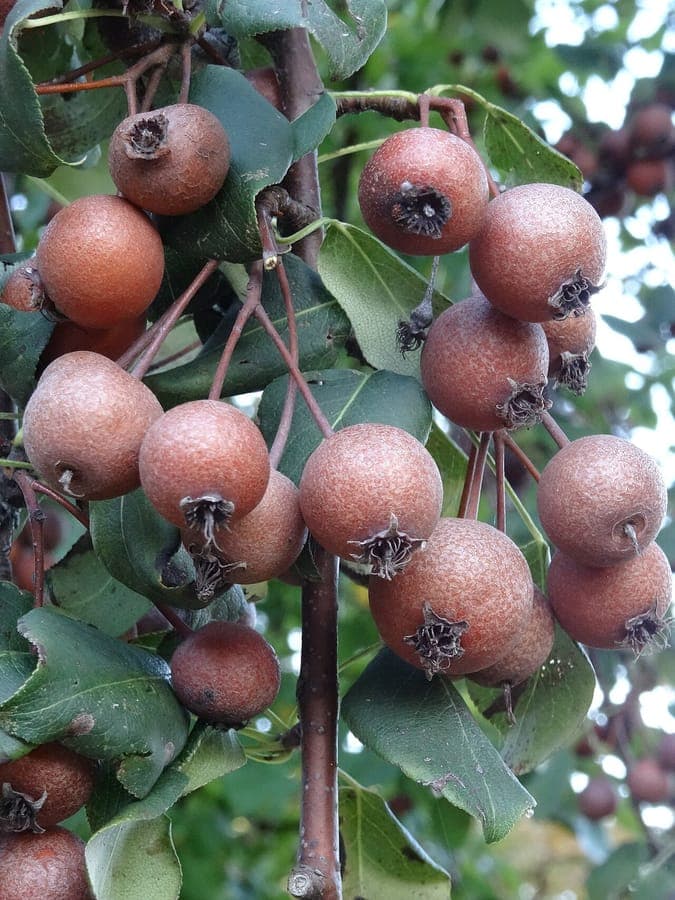
Beurré Hardy is the insider's tip among pear lovers - not as famous as Conference or Doyenné, but equally fine. Large (200-300g), buttery soft, sweet with nutty character and hints of vanilla-liqueur. Skin brownish-gold (not pretty yellow), but flesh? Pure bliss.
What sets Beurré Hardy apart: frost-hardy to -20C (most table pears fail under -15C), grows more vigorously than Williams, and reasonably self-sufficient (self-sterile but easier pollination than Doyenné). This makes it ideal for people in colder regions wanting luxury pear - Doyenné would be risky, but Beurré Hardy stands with frost-hardiness.
Beurré Hardy is not self-fertile, you need a real pollinator. Best: Conference or Williams (both early May bloom, perfect overlap). Doyenné also works but slightly later bloom (late May).
Forming Beurré Hardy: standard pear formation
Years 1-3 formation identical to all table pears:
- Year 1: clear trunk 70 cm, select 3-4 primary branches at 40-100 cm height, head central 20-30 cm
- Year 2: extend primaries 30-40 cm, remove inward-growing laterals, consolidate structure
- Year 3: develop secondary branches (2-3 per primary), build open crown, aim for 2.5-3 m total
Beurré Hardy follows the curve - no quirks in formation. Though: Beurré grows somewhat more vigorously than Conference, so you can prune a bit more boldly (primaries slightly more heading).
Yield decline Beurré Hardy: moderate (better than Doyenné)
Where Doyenné has extreme yield decline (good year, bad year, good year sharp contrast), Beurré Hardy is moderate: years are fairly regular, with sometimes a slightly weaker year.
Typical pattern:
- Years 4-5: 10-20 kg
- Years 6-7: 15-25 kg
- Years 8-9: 18-28 kg
- Year 10+: 20-30 kg stable
This is far more predictable than Doyenné (where you have 8-12 kg dip-years). Beurré's yield decline is more "normal variation" than "extreme cycle".
Why? Beurré doesn't form excessively many flower buds in good years like Doyenné. This makes her naturally more regular. Summer pruning + moderate hand-thinning helps smooth peak years.
Summer pruning Beurré Hardy: essential for form
Although yield decline is milder, summer pruning (August) still important for Beurré:
- Beurré grows more vigorously - without summer pruning crown quickly thickens
- Summer pruning prevents watersprouts (Beurré readily forms after hard pruning)
- Ventilation: better air circulation = fewer fungal issues (important in humid Northern European gardens)
August summer pruning Beurré:
- New growth > 15 cm, > 3 mm thick: cut back to 10-15 cm
- New growth < 10 cm, < 2 mm: leave it
- Remove inward-growing shoots
- Open dense packs (50% light penetration)
This feels gentler than summer pruning Conference/Doyenné (you cut less raw), but effect on form-retention is large.
Preventing early frost damage
Beurré is frost-hardier than most table pears, but young wood is always sensitive. Precautions:
Late frost protection (May)
If your region is frost-prone (valley where cold settles, or north-facing slope), DON'T plant Beurré in frost-pocket. Choose slightly higher terrace or south-facing. Late-frost days (May, during bloom) can destroy entire crop - planting location is crucial.
Watersprouts after hard pruning
Beurré forms watersprouts faster than Conference or Doyenné. This is character, not error. Prevention: avoid harsh winter pruning (> 50% heading). Summer pruning preferred (gentler, distributed).
Watersprouts appearing anyway? Remove as soon as visible (June-July, not in winter - winter pruning triggers more). Repeat until they stop (usually after 2-3 removals).
Diseño gratis
Crea tu propio diseño de jardín
Bearing strategy Beurré Hardy: moderate hand-thinning
Beurré has no extreme yield decline, so thinning less aggressive than Doyenné:
Hand-thinning Beurré:
- Years 4-5: thin to 1 pear per 15 cm twig (moderate)
- Year 6+: thin to 1 per 15-20 cm (even less aggressive)
- Smaller pears (200-250g) are fine for Beurré - you don't need to push to 400g
This keeps tree stronger than Doyenné-regime, and pears are still large enough for table.
Step-by-step plan for Beurré Hardy
Step 1: Choose pollinator and prevent frost damage
Plant a Conference or Williams beside your Beurré Hardy (max 15 m). Ensure site without late-frost risk (south-facing, not valley). Full sun, good drainage.
Step 2: Years 1-3 basic formation (March yearly)
Year 1: 3-4 primaries, head central. Year 2: extend primaries, clean inward. Year 3: secondaries (2-3 per primary), open crown. Standard pear formation.
Step 3: Years 4-5 first bearing with moderate thinning
March: light heading (15-20 cm), remove inward. June: hand-thin to 1/15 cm (moderately aggressive). August: summer prune (new growth > 15 cm back, inward gone, dense open).
Step 4: Year 6+ maintenance phase
March: minimal pruning (10 cm, mostly diseased/damaged). June: thin to 1/15-20 cm (less aggressive). August: standard summer prune.
Step 5: Actively prevent watersprouts
If watersprouts appear: remove as soon as visible (June-July), not winter-pruned. Repeat. Summer pruning preferred (avoid harsh winter pruning).
Frequently asked questions
How does Beurré Hardy differ from Conference?
Conference: self-fertile, earlier bearer (year 4), somewhat more compact grower, stronger yield decline. Beurré Hardy: self-sterile (needs pollinator), later bearer (year 5-6), more vigorous grower, milder yield decline. Both good - Beurré better frost-hardy, Conference better for the impatient.
Can I grow Beurré Hardy without a pollinator?
No, self-sterile. You MUST have Conference or Williams nearby. Garden narrow? Plant them together (side by side, both get good sun).
Beurré grows fast - how do I limit size?
You don't. That's not what Beurré Hardy does. She grows large (3-3.5 m tall, 3 m wide). Plant with space (min 3 m from boundary/shed). For tiny garden Conference/Doyenné better.
How do I prevent Beurré forming watersprouts?
Avoid harsh winter pruning (not > 50% heading). Summer pruning preferred (August, light). Remove watersprouts as soon as visible (June-July). Good feeding (spring compost, no excess nitrogen).
When do I harvest Beurré?
October-November, when brownish-gold skin and slightly soft. Clip gently (don't pull). Ripen a few more days at room temperature - flesh softens beautifully. Beurré ripens well post-harvest (unlike Doyenné).
How long until first harvest?
Year 5-6 for first meaningful fruit (couple of kg). Year 7+ full harvest. This is longer than Conference (year 4), but Beurré's frost-hardiness and flavour justify waiting.
Beurré Hardy in colder climates
Beurré Hardy is ideal for gardens in northern Netherlands, Belgium, northern France, Germany. Frost-sensitive varieties (Doyenné, Williams) may fail here - Beurré stands to -20C, sometimes -25C. This makes Beurré "the pear for the north".
However: young wood (first growth years) is more tender. So don't plant in frost-pocket (valley where cold settles). Ensure free air circulation.
Harvesting and serving Beurré Hardy
Beurré reaches maturity around year 10-12, then 3-3.5 m tall, 3 m wide. With good pruning + moderate hand-thinning bears:
- Years 5-6: 5-10 kg
- Years 7-10: 15-28 kg yearly
- Year 10+: 20-30 kg stable
Pears 200-300g, golden-brown skin, buttery soft flesh - serve at room temperature (not cold from fridge). With champagne or white burgundy a five-star experience.
On gardenworld.app you can see how a mature Beurré Hardy pear tree (years 8-10, laden with medium golden-brown fruit) would fit in a garden with northern character. Beurré grows visibly fast - after 4-5 years you have substantial volume.
Crea tu propio diseño de jardín
Sube una foto, elige un estilo y obtén un diseño fotorrealista con lista de plantas en menos de un minuto.
Más de 10.000 jardines diseñados
Sin tarjeta de crédito


Artículos relacionados
 Plantación
Planting fruit trees in your garden
From apple to cherry: learn which fruit trees suit your garden and how to plant and care for them successfully.
 Consejos estacionales
Pruning trees and shrubs: when, how and why
Learn when and how to prune trees and shrubs for healthy growth and beautiful shapes. Practical pruning tips.
 Construcción de jardines
Pruning calendar: when to prune which plant — month by month
When to prune? Spring, summer, autumn, winter — which plants prune which month? Practical pruning calendar for most-used garden plants.