
Velella / CC BY-SA 4.0, via Wikimedia Commons
Rhododendron campylogynum: complete guide
Rhododendron campylogynum
Mochten Sie Rhododendron campylogynum: complete guide in Ihrem Garten sehen?
1 Minute, keine Kreditkarte
Overview
Rhododendron campylogynum is a rare and exclusive alpine dwarf species native to mountainous regions of Tibet, Yunnan (China), and Myanmar. This exquisite shrub is renowned for its compact growth, minute leaves, and delicate purple to pink flowers. In its natural habitat, this plant grows on rocky slopes and in alpine meadows at elevations of 2000-4000 meters, where it has adapted to cold, wet conditions.
For collectors of alpine plants and rhododendron enthusiasts, this is a jewel that can bloom and propagate for decades. The plant reaches only 20-40 centimeters in height and forms a compact cushion shape.
Appearance and bloom
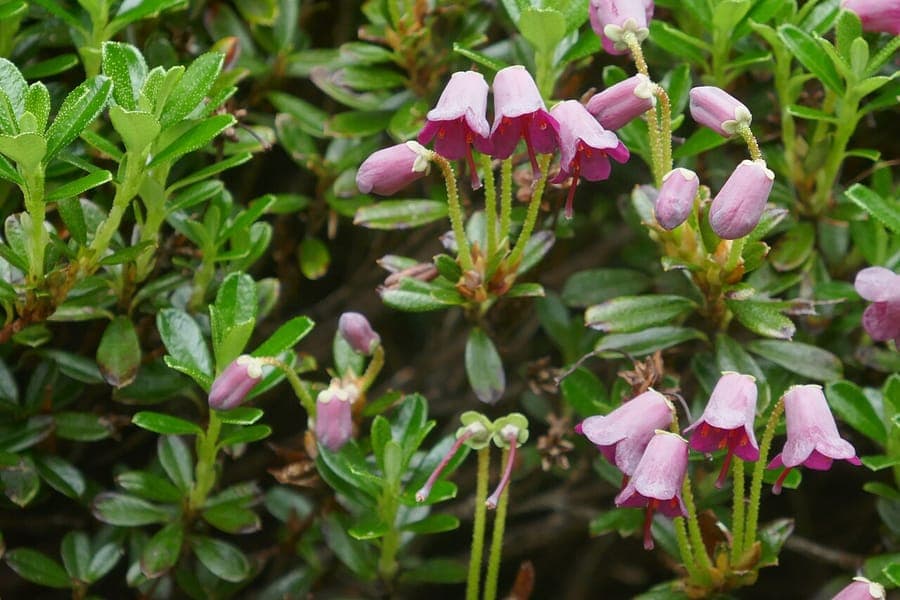
Rhododendron campylogynum has very small, glossy leaves about 0.5-1 centimeter long, densely packed together. The plant forms a naturally compact, rounded cushion. Flowers appear in May-June and are beautiful rose to deep purple, about 1-1.5 centimeters in diameter, and grow in small clusters.
The flowers smell subtly pleasant and attract many bees. After blooming, small dry seed pods form. Leaves may turn reddish in severe winters, adding extra ornamental value.
Ideal location
Rhododendron campylogynum thrives best in partial to full shade with some extra light in spring. Full sun in warm regions can lead to leaf scorch. A spot under tree roots with filtered sunlight is ideal. In alpine gardens, a northwestern slope location works well.
This plant benefits from air circulation to avoid moisture-related diseases. Plant it not in open windy spots, but give it some protection from larger trees or shrubs.
Soil
Rhododendron campylogynum requires very well-draining, acidic soil with a pH of 4.5-5.5. The soil must provide loose, moisture-retentive yet well-draining substrate. Mix 50% highland peat or sawdust, 30% peat moss, and 20% sharp sand. This creates the ideal airy, acidic environment.
In pots, a mix of 40% peat, 30% highland peat, and 30% perlite works well. Drainage is essential - waterlogging is deadly.
Kostenloses Design
Mochten Sie Rhododendron campylogynum: complete guide in Ihrem Garten sehen? Erstellen Sie jetzt ein kostenloses Design.
Watering
Rhododendron campylogynum loves consistent moisture but tolerates no waterlogging. Water regularly so the soil stays moist but never wet. During dry periods, water when the top 1 centimeter feels dry. In winter, water less, but never let completely dry.
Use soft, acidic water (rainwater is ideal). Hard water with lime can damage the plant. Mist during dry periods to raise air humidity levels.
Pruning
Rhododendron campylogynum requires virtually no pruning since it grows naturally compact. Remove only withered or diseased leaves. Remove spent flowers to prevent seed production, saving the plant energy for next year's bloom.
Never prune heavily - let the plant retain its natural form. Minimal intervention is best practice.
Maintenance calendar
Spring: begin watering when growth starts, give light feeding. Summer: water regularly (important season), mist regularly. Autumn: gradually reduce water, no feeding. Winter: minimal water, ensure plant never fully dries.
Monthly in spring-summer: check for pests (spider mite, aphids), treat carefully.
Winter hardiness
Rhododendron campylogynum is very winter-hardy to -20 degrees Celsius and grows well in Dutch and Belgian alpine gardens. The plant is adapted to cold winters. In extreme frosts, leaf damage may occur, but this recovers. Protection from winter wet feet is more needed than frost protection.
In low-lying areas, the plant may suffer from summer heat - provide shade in warm climates.
Companion plants
Rhododendron campylogynum combines well with other alpine dwarf rhododendrons and ericaceae: other small Rhododendron species, arctica, cassope, or gaultheria. Alpine sedges, sedum, and saxifraga also make beautiful partners. Plant in groups on rocks or raised beds.
Avoid companion plants requiring much feeding, as this can lead to overly lush growth.
Closing
Rhododendron campylogynum is for dedicated gardeners and plant collectors seeking something special. This alpine jewel offers years of bloom and growth, if well maintained. With patience and the right conditions, you will enjoy its delicate purple flowers each spring. Seek collector's nurseries for this rare species. Gardenworld.app helps with alpine garden designs.
Mochten Sie Rhododendron campylogynum: complete guide in Ihrem Garten sehen? Erstellen Sie jetzt ein kostenloses Design.
Foto hochladen, Stil wahlen und in unter einer Minute ein fotorealistisches Design inklusive Pflanzenliste erhalten.
Schon 10.000+ Garten gestaltet
Keine Kreditkarte erforderlich


Ähnliche Pflanzen
Zenobia pulverulenta: kompletter Ratgeber
Zenobia pulverulenta
Alles zu Zenobia pulverulenta: Standort, saurer Boden, Schnitt und die duftenden weissen Glocken in diesem kompletten Pflegeratgeber.
Zwerg-Heidelbeere: kompletter Ratgeber
Gaylussacia dumosa
Alles ueber die Zwerg-Heidelbeere (Gaylussacia dumosa): saurer Boden, Halbschatten, Schnitt und Pflege dieses kompakten nordamerikanischen Beeren-Straeuchleins.
Fontanes Scheinkamelia: kompletter Ratgeber
Leucothoe fontanesiana
Alles zur Fontanes Scheinkamelia (Leucothoe fontanesiana): Schatten, saurer Boden, Giessen, Schnitt, Winterharte und Begleitpflanzen.