
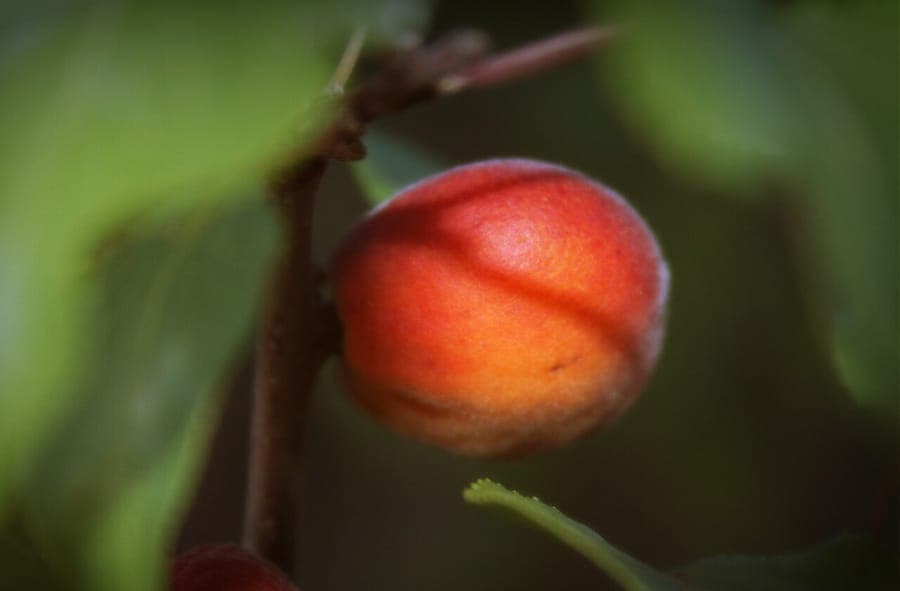
Аркадий Зарубин / CC BY-SA 3.0, via Wikimedia Commons
Prunus sibirica: complete guide
Prunus sibirica
Mochten Sie Prunus sibirica: complete guide in Ihrem Garten sehen?
1 Minute, keine Kreditkarte
Overview
Prunus sibirica, commonly known as Siberian apricot, is a fruit-bearing tree from the Rosaceae family (Rose family). This hardy tree originates from Southern Siberia, Northern China, and Korea, where it grows in harsh mountainous areas with extremely cold winters. This heritage makes it superbly suited to temperate to cold climates.
The tree is renowned for its spectacular spring bloom with white to pale pink flowers covering branches before leaves emerge. After flowering, the tree produces small, yellow apricots that are edible, though often smaller than cultivated varieties. The tree typically reaches 4 to 8 meters height with a broad, rounded crown. This is not a typical fruit tree for small gardens but rather a fascinating small to medium tree for larger landscape use.
Appearance and bloom
Prunus sibirica is an elegant tree with striking spring flowering. The tree grows to approximately 5 to 7 meters height and develops a broad, rounded crown. Foliage is elliptic to lance-shaped, fresh green, and approximately 5 to 8 centimeters long.
The flowers represent this tree's absolute highlight. They appear in profusion on branches before leaves emerge, creating a spectacular white to pale pink canopy. Flowers measure approximately 2 to 2.5 centimeters diameter with five petals. Blooming period runs March to April depending on climate.
After successful pollination, the tree produces small to medium apricots measuring 2 to 3.5 centimeters diameter. Fruit is yellow to orange-yellow when ripe and contains a hard stone with seed. The fruit is edible but often more tart than cultivated varieties.
Ideal location
Prunus sibirica grows best in sunny locations with at least six hours direct sunlight daily. The tree tolerates shade but produces fewer flowers and less fruit. An open, well-ventilated position is ideal for preventing flower diseases.
The tree suits both interior and boundary use, both as a specimen tree and in larger planting schemes. It grows well at property edges, in small to medium gardens, and can even be planted in groups. The tree tolerates urban conditions well.
Soil
Prunus sibirica is highly tolerant of various soil types. The tree grows well on sandy, loamy, and clay soils. It tolerates even poor, loamy soils and grows acceptably on soils with slight alkalinity.
However, well-drained soil is important to prevent foot rot and diseases. Heavy clay should be improved with sand or organic matter. The tree accepts soil pH approximately 6 to 8, though it does not grow well in very acidic soils. Regular composting at planting helps initially.
Kostenloses Design
Mochten Sie Prunus sibirica: complete guide in Ihrem Garten sehen? Erstellen Sie jetzt ein kostenloses Design.
Watering
Once established, Prunus sibirica is fairly drought-tolerant. The tree is adapted to continental climates with dry periods. Regular moist soil during growing and flowering periods helps, but excessively wet situations must be avoided.
Under normal weather conditions, supplemental watering is rarely necessary beyond the first growing year. Young planted trees benefit from regular watering until well established. Mature trees tolerate dry weather for considerable periods.
Pruning
Prunus sibirica requires moderate maintenance regarding pruning. The tree naturally forms well and needs no intensive formative pruning. Dead, damaged, or crossing branches may be removed after flowering.
The tree can be gently shortened to grow more compactly or maintain shape. Major pruning is unnecessary. Pruning is best done in summer after flowering to minimize disease pathogens.
Maintenance calendar
- March-April: Spring bloom, insect pollination
- May-June: Fruit set and growth
- July-August: Fruit ripens, turning yellow to gold
- August-September: Harvest fruit for consumption
- October-March: Tree dormant, winter period
Winter hardiness
Prunus sibirica is extremely winter-hardy and can tolerate temperatures down to minus 35 to minus 40 degrees Celsius. This makes it ideal for continental climates in Northern Europe and other cold regions. The tree suffers no damage from normal winter frost periods.
The tree requires cold winter periods for good flower and fruit production. In very warm climates, the tree will flower poorly. The tree is ideal for cold temperate zones.
Companion plants
Prunus sibirica works well with:
- Other Prunus species (cherries, peaches)
- Amelanchier (serviceberry)
- Sorbus (rowan)
- Malus (wild apple)
- Cornus (dogwood)
- Viburnum (viburnum)
- Syringa (lilac)
These combinations create interesting spring and bird-supporting landscape schemes.
Closing
Prunus sibirica is a fascinating and hardy fruit tree deserving far greater attention in temperate gardens. Its exceptional winter hardiness, spectacular spring bloom, and production of edible apricots make it valuable. With GardenWorld, integrate this Siberian beauty into your garden design and enjoy annual floral display. This tree brings not only structure and beauty but also produces fruit for home consumption, making it a versatile choice for sustainable garden designs.
Mochten Sie Prunus sibirica: complete guide in Ihrem Garten sehen? Erstellen Sie jetzt ein kostenloses Design.
Foto hochladen, Stil wahlen und in unter einer Minute ein fotorealistisches Design inklusive Pflanzenliste erhalten.
Keine Kreditkarte erforderlich


Ähnliche Pflanzen
Sibirischer Holz-Apfel: kompletter Ratgeber
Malus x robusta
Kompletter Ratgeber zum Sibirischen Holz-Apfel (Malus x robusta): Standort, Boden, Schnitt, Winterhaerte und die besten Begleitpflanzen fuer Ihren Garten.
Chinesischer Zierapfel (Malus x spectabilis): kompletter Ratgeber
Malus x spectabilis
Entdecken Sie den chinesischen Zierapfel (Malus x spectabilis): Fruehlingsblueher mit karminroten Knospen und rosa Bluete.
Potentilla crassinervia: vollständiger Ratgeber
Potentilla crassinervia
Potentilla crassinervia, das korsische Bergfingerkraut, wächst auf Gipfeln Korsikas und Sardiniens. Entdecken Sie Anbau und Pflege im Steingarten.